
Beyond Human Society: Wayanad and the Nilgiris as Living Laboratories of Sociology
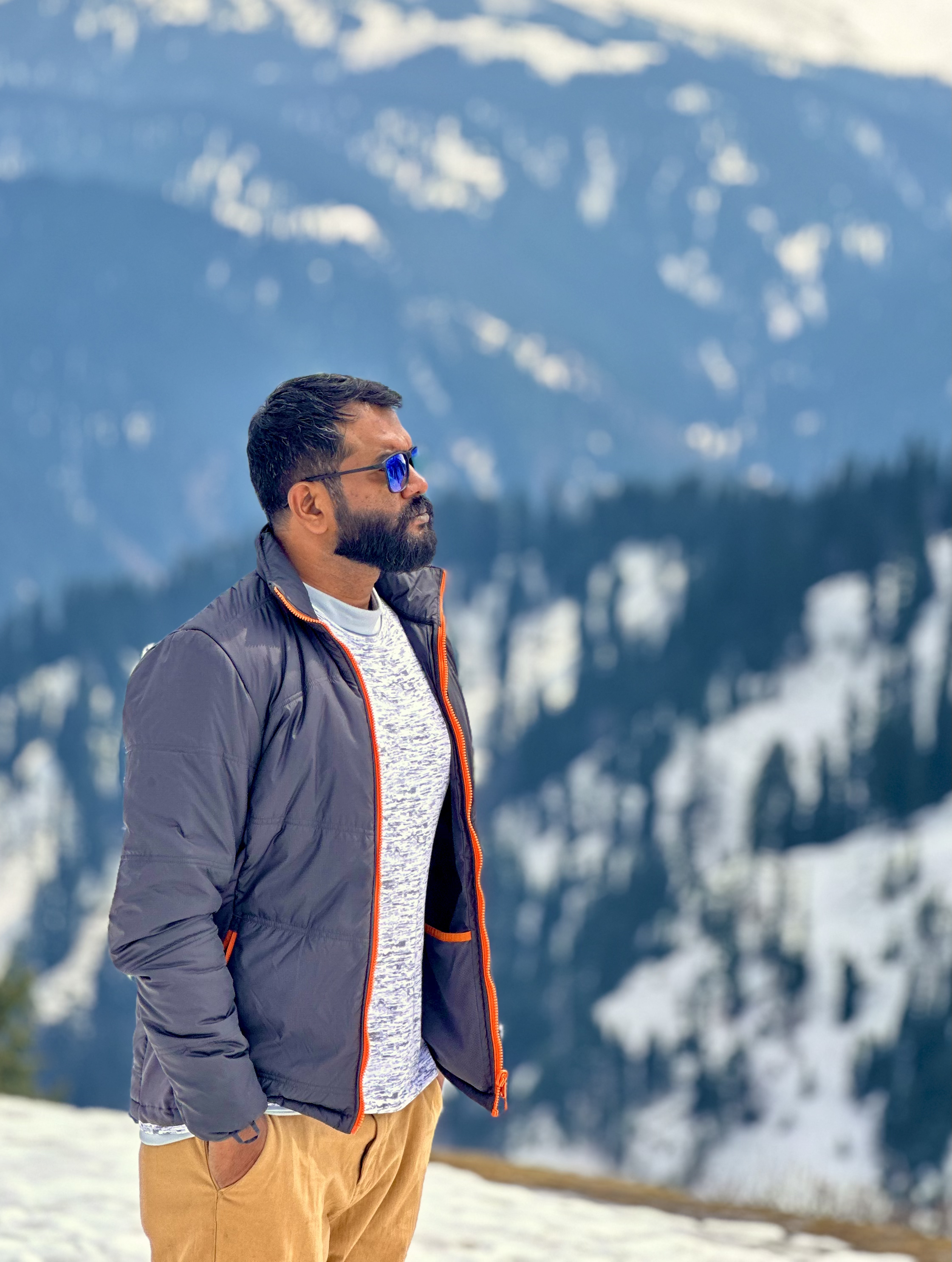
Rethinking the relationship between human communities, historical landscapes, and the ecosystems that sustain them.

There are landscapes that reveal themselves through their physical beauty, and there are landscapes that demand a deeper intellectual engagement. The Nilgiris and Wayanad belong to the latter. Their mountains, forests, archaeological remains, indigenous communities, and extraordinary ecological diversity offer more than a geographical experience. They present an opportunity to understand the evolution of human societies within the larger conditions of the natural world.
To approach these regions sociologically is to encounter a fundamental question: Can human society be understood independently of the ecological systems, geographical conditions, and non-human life forms within which it exists?
The conventional boundaries of sociology have largely placed human beings, their institutions, social relationships, cultures, and systems of power at the centre of inquiry. Yet, the environments within which these social structures emerge are often treated as external conditions rather than as integral components of social existence.
Wayanad and the Nilgiris challenge this separation.
They invite a form of sociological inquiry that moves beyond the study of human societies as isolated systems and towards an understanding of the complex relationships between people, land, history, biodiversity, and ecological processes.
The landscape itself becomes a source of sociological knowledge.
This understanding also opens an important perspective on how destinations are experienced and managed. A place is not merely a geographical location to be visited. It is a living environment shaped by generations of human interaction, ecological processes, and cultural transformation. Understanding these relationships becomes essential not only to sociology, but also to any meaningful approach to destination management.

1. Wayanad: A Landscape of Historical Continuity
Wayanad occupies a remarkable position within the Western Ghats of southern India. Its elevated plateau, forested mountains, valleys, agricultural landscapes, and proximity to the Nilgiri highlands have shaped the movement and settlement of communities over centuries.
The geographical character of the region is inseparable from its social history.
The name Wayanad is commonly understood as a derivation of Vayal Nadu, meaning the land of paddy fields. This association between land and livelihood is significant. It reflects a historical relationship in which the physical characteristics of a region have influenced its economic activities, settlement patterns, and cultural development.
But the history of Wayanad extends far beyond its agricultural identity.
The archaeological landscape of the region provides evidence of human presence extending into prehistoric periods. Among the most remarkable sites is Edakkal, a prehistoric rock shelter situated in the Ambukuthi Hills.
Despite being popularly described as caves, the Edakkal formations are naturally occurring rock shelters, created by the arrangement of massive boulders. Their walls preserve engravings depicting human figures, animals, symbols, and other forms of expression. The site has been associated with multiple periods of human activity, while archaeological research and interpretation continue to explore the significance of its engravings.
These engravings are not merely ancient illustrations.
They are fragments of a social world.
They invite questions about the people who created them, the environments they inhabited, the symbolic systems they developed, and the ways in which human experiences were recorded and communicated before the emergence of modern written histories.
What did these early communities understand about their surroundings? How did they perceive animals, landscapes, and other human beings? What forms of collective memory, belief, or social organisation existed within their communities?
The engravings cannot independently answer all these questions. Their meanings require careful archaeological interpretation, and many remain uncertain.
Yet their very existence establishes an important point: the relationship between human beings and their surroundings has a history far older than the institutions and social structures through which modern society is understood.
The landscape preserves evidence of that relationship.
For destination management, this historical depth presents an equally important consideration. Places such as Edakkal cannot be meaningfully interpreted through their visual appeal alone. Their significance lies in the stories, archaeological evidence, and cultural contexts that surround them. The responsibility of introducing such places to travellers begins with understanding what they represent and recognising the limits of what can be claimed about their past.

2. Indigenous Communities and the Sociology of Living Knowledge
The sociological significance of Wayanad cannot be explored through archaeological remains alone.
Its living communities provide equally important insights into the relationship between human society and the natural world.
Wayanad is home to several indigenous communities, including the Paniya, Adiya, Kurichiya, Kuruma, and Kattunaikka. These communities possess distinct histories, languages, cultural practices, and relationships with the landscapes they inhabit.
Their presence introduces a critical dimension to sociological inquiry: knowledge does not exist exclusively within formal institutions, academic disciplines, or written archives.
Knowledge is also embedded in everyday life.
It may be expressed through agricultural practices, the identification of plants, seasonal observations, food systems, the use of forest resources, cultural rituals, and the transmission of experience across generations.
Such knowledge is often inseparable from the environment within which it has developed.
The cultivation of particular crops, for example, is not simply an economic activity. It may involve an understanding of soil conditions, rainfall patterns, local biodiversity, and the ecological characteristics of a landscape.
Similarly, the use of particular plants may reflect generations of accumulated observation and experience.
The important sociological question is not whether these knowledge systems are identical to scientific methods. Rather, it is how different forms of knowledge emerge, how they are transmitted, and how they influence the relationship between communities and their environments.
This is particularly significant in regions where indigenous communities have experienced historical marginalisation, changes in land ownership, restrictions on access to forests, and transformations in traditional livelihoods.
The relationship between a community and its environment is never exclusively ecological. It is also political, economic, and historical.
Who possesses the authority to determine how a forest is used? Whose knowledge is recognised in conservation policies? What happens when the relationship between a community and its land is altered by external institutions?
These questions reveal that ecological change and social inequality cannot always be studied separately.
The forest is not merely a natural resource. For communities whose histories and livelihoods are connected to it, the forest may also represent memory, identity, knowledge, and continuity.
Understanding these relationships requires sociology to move beyond the observation of cultural practices and towards an examination of the social conditions that sustain or transform them.
This understanding is particularly relevant to the future of destination management in Kerala. Community interaction should not be reduced to a scheduled cultural performance or a brief encounter designed exclusively for visitor consumption. Meaningful engagement requires an appreciation of community agency, consent, cultural context, and the economic relationships through which tourism operates.
The question is not simply how travellers can experience a community, but how tourism can engage with communities without reducing their identities to tourism products.
3. The Nilgiris and Wayanad: Geography as an Active Force in Society
The Nilgiris and Wayanad occupy a significant position within the ecological geography of southern India.
The Western Ghats are internationally recognised for their exceptional biodiversity, endemism, and influence on regional climatic systems. Their mountain forests play an important role in shaping monsoon patterns and supporting a wide range of ecosystems.
The Nilgiri Biosphere Reserve illustrates this ecological diversity through its forests, grasslands, montane ecosystems, and varied habitats. It is a region of considerable biological significance, containing numerous species and ecosystems that are important for conservation.
Wayanad, situated within the larger Western Ghats landscape and adjoining the Nilgiri highlands, forms part of this broader ecological and geographical continuum.
This geographical position has consequences for human society.
Mountain ranges influence movement and settlement. Rainfall influences agriculture. Forests provide habitats for wildlife and shape the availability of natural resources. Valleys and plateaus influence the development of settlements and the movement of people across regions.
Geography does not mechanically determine social behaviour. Human societies possess the capacity to adapt, innovate, organise, and transform their environments.
Nevertheless, the physical world establishes conditions within which these processes unfold.
The relationship between geography and society is therefore dynamic.
Human communities alter landscapes through agriculture, settlement, infrastructure, and resource use. In turn, environmental conditions influence livelihoods, cultural practices, economic opportunities, and social organisation.
The land is not simply the setting in which society exists. It is part of the historical process through which society is formed.
This perspective challenges destination management to look beyond the conventional boundaries of tourism geography. A destination is not simply a collection of attractions connected by roads and accommodation. It is an ecological and social landscape in which tourism itself becomes another form of human activity.
The movement of visitors, the construction of infrastructure, the demand for resources, and the transformation of local economies all have consequences for the destination.
For ALT DMC, this presents an opportunity to approach Kerala through a more integrated understanding of its landscapes, recognising that the experience of a destination is inseparable from the ecological and social conditions that sustain it.

4. Beyond the Human-Centred Understanding of Sociology
One of the most significant intellectual challenges facing contemporary sociology is the question of how to understand human society within a world undergoing rapid ecological transformation.
Climate change, biodiversity loss, habitat fragmentation, resource depletion, and environmental degradation are frequently approached through the frameworks of environmental science, economics, or public policy.
Yet these processes are also deeply sociological.
They influence patterns of migration, livelihoods, inequality, social conflict, cultural continuity, and the distribution of economic opportunities.
The consequences of ecological change are rarely experienced equally.
A community dependent on forest-based livelihoods may experience environmental transformation differently from an urban population with access to alternative resources. Agricultural communities may be affected differently by changes in rainfall than populations whose livelihoods are less dependent on climatic conditions.
Environmental change therefore becomes a question of social vulnerability, power, and inequality.
This understanding is consistent with the development of environmental sociology, a field that examines the relationship between societies and their environments.
However, the broader intellectual possibility extends beyond treating the environment as an external variable affecting society.
It requires an examination of the interdependence between human and non-human life.
The disappearance of a species, the degradation of a forest, or the transformation of a river system can alter the conditions under which communities exist. These changes may influence livelihoods, cultural practices, food systems, and collective identities.
The implications are not confined to the ecological domain.
They extend into the social world.
A more comprehensive sociology must therefore ask how human institutions, economic systems, cultural practices, and political structures interact with the ecological systems that sustain life.
This does not mean abandoning the study of human societies. It means recognising that human societies are not independent of the world around them.
This broader understanding also invites a reconsideration of tourism. A destination cannot be separated from the ecological processes that sustain it. Tourism depends on landscapes, biodiversity, water, cultural heritage, and the social relationships through which a place acquires meaning.
The long-term value of a destination therefore depends, in part, on the health of the systems that make it distinctive.
5. The Ecosystem as a Sociological Field of Inquiry
An ecosystem is commonly understood as a system of interacting organisms and their physical environment.
From a sociological perspective, however, ecosystems also contain relationships that are shaped by human institutions, cultural meanings, economic practices, and historical processes.
Consider a forest landscape.
It contains trees, animals, microorganisms, soil, water, and climatic processes. It may also contain agricultural settlements, indigenous communities, conservation institutions, tourism infrastructure, and competing claims over land and resources.
These elements do not exist independently.
The ecological processes of the forest influence human livelihoods. Human activities influence the ecological condition of the forest. Institutions regulate access and use. Cultural knowledge shapes how the landscape is understood. Economic pressures may transform established relationships between communities and their environments.
The ecosystem becomes a field in which ecological and social processes intersect.
This perspective offers a way to examine the world beyond conventional disciplinary boundaries.
The study of a forest, for instance, may require ecological knowledge to understand biodiversity, historical research to understand land-use transformation, anthropology to understand cultural relationships, and sociology to examine power, institutions, inequality, and social change.
The purpose is not to dissolve the boundaries between disciplines.
It is to recognise that complex realities often require more than one disciplinary perspective.
Wayanad and the Nilgiris offer particularly compelling settings for such inquiry because their landscapes bring together historical evidence, living communities, ecological diversity, and contemporary processes of transformation.
They provide opportunities to examine how social and ecological systems evolve together.
This is also where destination management can move beyond operational coordination and become a more thoughtful process of interpretation. The development of a destination experience requires an understanding of the relationships that make a place meaningful, rather than simply identifying activities that can be packaged and sold.
For ALT DMC, this approach creates the foundation for destination experiences that connect travellers with the cultural, historical, and ecological dimensions of Kerala while remaining attentive to the realities of the places and communities involved.

6. Conservation, Development, and the Question of Coexistence
The relationship between human society and the natural environment becomes especially significant when examining conservation and development.
The Western Ghats are recognised for their ecological importance, yet their landscapes are also inhabited and used by human communities.
This creates complex questions about the relationship between conservation, livelihoods, rights, and development.
Conservation cannot be understood exclusively as the protection of non-human life from human activity. Nor can development be understood simply as the expansion of human economic activity without regard to ecological consequences.
Both involve questions about how societies organise their relationship with the natural world.
Who benefits from conservation? Who bears its costs? How are local communities involved in decisions affecting their landscapes? How can ecological protection be pursued without reproducing historical inequalities?
These questions are particularly important in regions where indigenous communities possess longstanding relationships with the land.
A sociological approach must recognise the diversity of human experiences within these landscapes. It must also recognise that communities are not homogeneous, that knowledge and interests may differ within them, and that conservation and development can produce unequal outcomes.
The challenge is not to romanticise traditional relationships with nature or assume that all historical practices were ecologically sustainable.
It is to examine these relationships critically, understand their historical conditions, and explore the possibilities for coexistence.
The future of conservation depends not only on ecological knowledge but also on an understanding of the social worlds within which conservation takes place.
Tourism, when developed without an understanding of these relationships, can contribute to environmental pressure, cultural commodification, and unequal distribution of economic benefits.
However, destination management that recognises these complexities can create opportunities for more responsible engagement. This requires careful consideration of visitor movement, local participation, environmental sensitivity, and the long-term implications of tourism development.
The objective is not to assume that tourism automatically produces conservation or community benefits. Rather, it is to recognise that the relationship between tourism, communities, and ecosystems must be deliberately understood and responsibly managed.
7. Rethinking the Boundaries of Sociological Knowledge
The Nilgiris and Wayanad provide a compelling basis for reconsidering the scope of sociological inquiry.
Their significance lies not merely in the presence of archaeological sites, indigenous communities, or biodiversity. It lies in the relationships connecting these elements.
The ancient engravings of Edakkal offer evidence of human expression across historical periods. Indigenous communities provide insights into the transmission of knowledge and the relationship between culture and landscape. The ecological diversity of the Nilgiri Biosphere Reserve reveals the complexity of the natural systems within which human societies exist.
Together, these dimensions challenge the assumption that society can be understood independently of its surroundings.
They also raise a broader question about the purpose of sociology.
If sociology seeks to understand the conditions under which human societies emerge, organise themselves, and transform over time, should its field of inquiry remain confined to human relationships?
Or should it also examine the ecological relationships, geographical conditions, and non-human processes that make human social existence possible?
The answer need not be a rejection of sociology’s established foundations.
Rather, it may be an expansion of its intellectual horizon.
An expanded sociology would examine human societies as historically situated, ecologically embedded, and materially interdependent systems.
It would recognise that social life is shaped not only by institutions, identities, and economic structures, but also by landscapes, climate, biodiversity, and the relationships between human and non-human life.
Such a perspective becomes increasingly important in a world where ecological transformation is reshaping the conditions of human existence.
It also offers a foundation for understanding destination management as a discipline that must engage with more than the logistics of travel.
To manage a destination meaningfully is to understand the social and ecological relationships that make it a destination in the first place.

Understanding Society Within the Larger World
The Nilgiris and Wayanad are more than geographical regions of extraordinary natural and cultural significance.
They are landscapes through which the relationship between humanity and the natural world can be examined across historical, cultural, ecological, and social dimensions.
Their archaeological remains preserve fragments of ancient human expression. Their living communities embody diverse histories and knowledge systems. Their forests, mountains, rivers, and biodiversity form part of the ecological foundations upon which human societies depend.
The significance of these landscapes lies in the connections between these different dimensions.
They remind us that society is not an isolated human construction existing independently of the natural world. It is part of a larger system of relationships involving history, culture, geography, ecology, and life itself.
Perhaps the next important development in sociological thought will not emerge from looking more deeply into human society alone, but from looking outward towards the world within which society exists.
Because understanding humanity requires more than understanding human beings.
It requires understanding the relationships that make human existence possible.
And the most profound sociological inquiry may begin when the boundaries between society and the world around it are no longer treated as separate, but as interconnected dimensions of the same reality.
This understanding also invites a different way of introducing Kerala to the world.
Not simply as a destination of backwaters, beaches, mountains, and cultural attractions, but as a living landscape whose significance emerges from the relationships between its people, history, ecology, and culture.
For ALT DMC, this becomes the foundation of a destination management philosophy: to understand the destination before presenting it, to recognise its communities beyond their tourism value, and to create travel experiences that encourage a deeper engagement with the places people visit.
The idea is not to make tourism the centre of the destination.
It is to make the destination itself the centre of tourism.


Comments